How ZTNA 2.0 extends security beyond the initial access decision
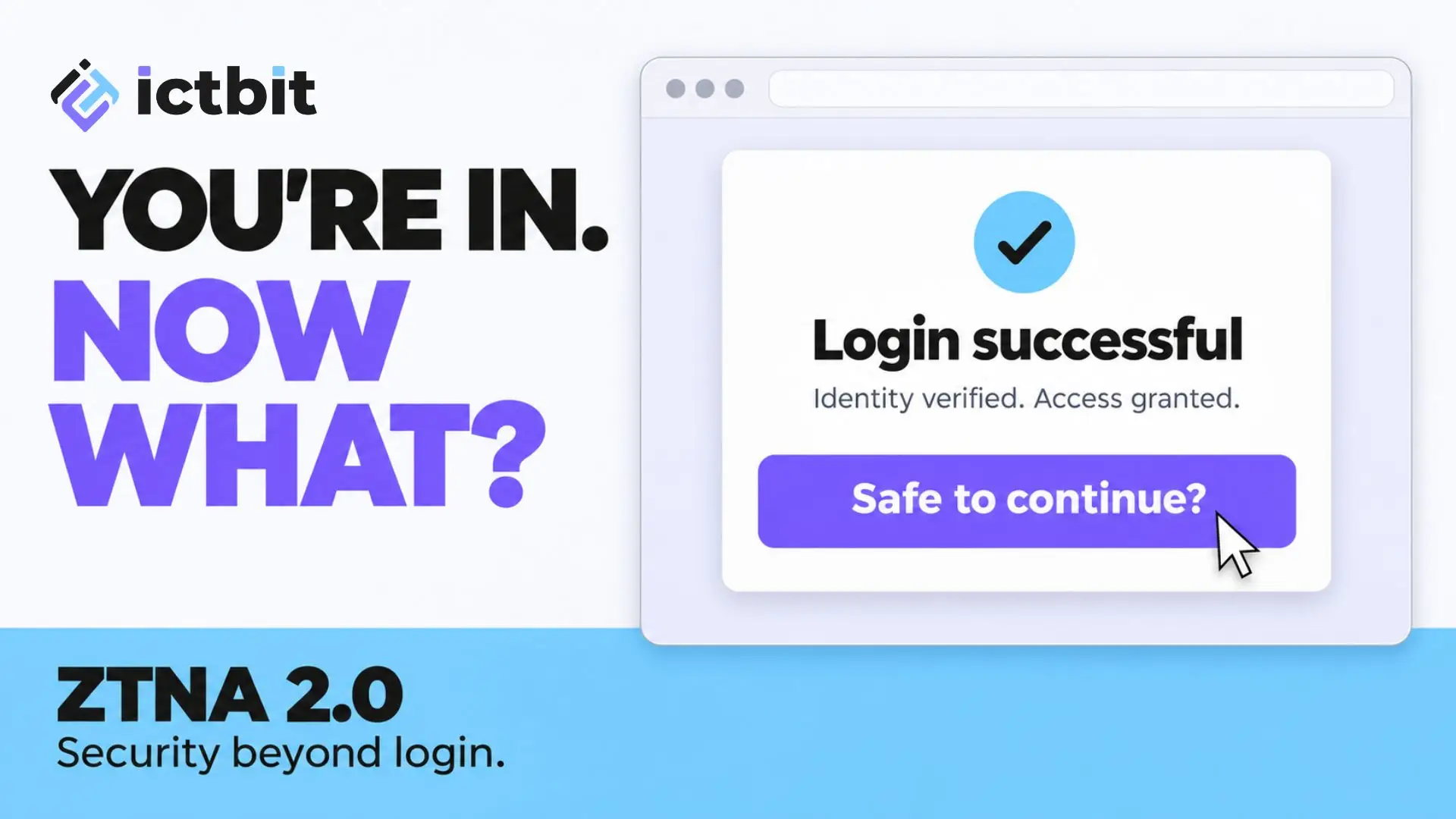
A successful login can come from a compromised device.
One client felt confident about their security setup. They had replaced VPN access with ZTNA, implemented strong identity checks, and limited users to specific applications. In their words: “We’re Zero Trust now.”
Then a user’s device was compromised without triggering an alert. The user logged in as usual and was granted access. The deployment validated identity and permissions, but lacked the inspection and controls needed to respond to what happened inside the session.
That experience exposed a gap worth examining in any access architecture: what happens when the risk changes after the connection has already been approved?
The Gap After Access Is Granted
Restricting users to specific applications is an important security measure. Identity verification establishes who is requesting access. It does not, by itself, establish that everything happening through an approved connection is safe.
A device’s security posture can change. Malicious activity can take place within the permissions a user already holds. If the access layer cannot inspect that activity or respond to new risk signals, an authenticated session can remain open when it should be restricted.
Zero Trust calls for continuous assessment of whether a session still meets the organization’s access policy. The practical test is whether the deployment can use updated context to maintain, limit, or revoke access while the session is active. pages.nist.gov
What ZTNA 2.0 Changes
Palo Alto Networks uses the term ZTNA 2.0 for an approach that combines granular application access with continuous trust verification and ongoing security inspection. Prisma Access brings these capabilities together so protection can continue after a connection is established. www.paloaltonetworks.com
Continuous trust verification. Access can be reassessed using changes in device posture, user behavior, and application behavior. When available signals indicate increased risk, policies can restrict or revoke access during an active session.
Ongoing traffic inspection. Approved connections remain subject to security inspection. This helps identify threats within traffic that would otherwise be treated as legitimate simply because the user was allowed to connect.
Granular application access. Application-aware controls can limit access to the applications and functions users need, reducing unnecessary exposure. The goal is to keep permissions aligned with the work being performed. www.paloaltonetworks.com
The effectiveness of these controls depends on the inspection capabilities, signals, and enforcement policies configured in the deployment. Those details deserve as much attention as the initial authentication process.
Four Questions to Ask About Your Current Deployment
- Is traffic inspected after access to an application has been granted?
- Which changes in device posture or activity can trigger a new access decision?
- Can access be restricted or revoked while a session is still active?
- Can the security team see why an access decision changed and investigate the event?
Reviewing Your Access Architecture with ICTBIT
The client’s experience showed why strong identity controls need visibility and enforcement throughout the session. At ICTBIT, that is the question we encourage organizations to examine when reviewing their access architecture: what can your controls actually see and do after login?
For organizations already using ZTNA, a useful next step is to review application access policies, the signals available to the security team, and the actions those signals can trigger. This helps identify where the current deployment needs stronger inspection or more responsive enforcement.
Zero Trust needs to keep working after access is granted.
Talk to ICTBIT about reviewing your current access architecture and how Palo Alto Networks Prisma Access can support continuous protection for your users and applications.