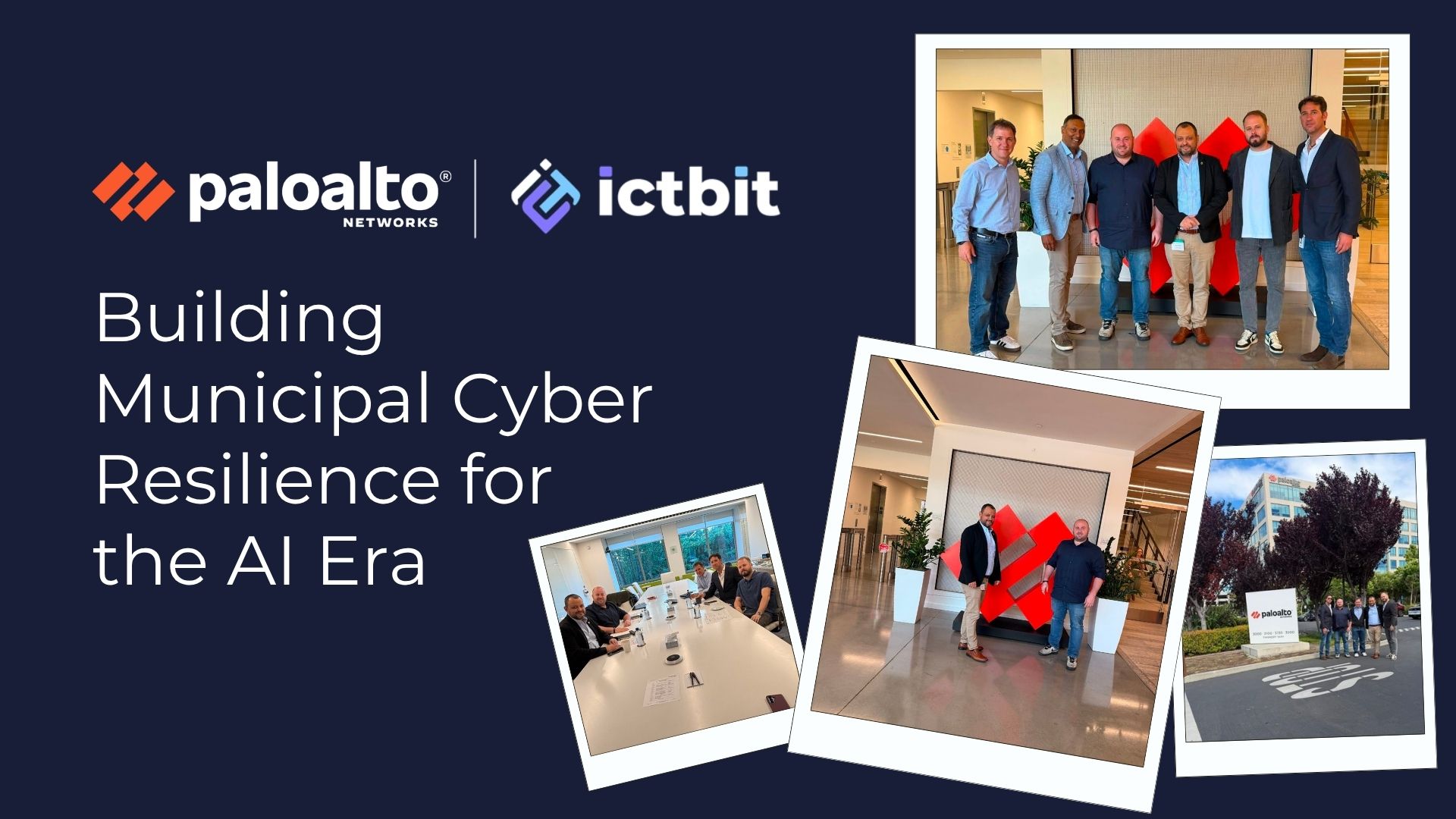
ICTBIT joined the Jerusalem Municipality for a strategic visit to Palo Alto Networks’ Executive Briefing Center in California, focused on the technologies, architectures and decisions shaping the future of public-sector cybersecurity.
Local authorities are becoming increasingly digital, connected and dependent on technology. The systems they operate support essential public services, sensitive information and ongoing municipal operations – making cybersecurity and operational resilience a strategic priority rather than a challenge that can be postponed.
As cyber threats evolve and artificial intelligence accelerates the pace of change, public-sector organizations must prepare not only for today’s risks, but also for an environment that is becoming more complex, dynamic and difficult to predict.
Against this backdrop, ICTBIT had the privilege of joining Tzion Shmoler, Head of the Cyber Division at the Jerusalem Municipality, for a professional visit to the Palo Alto Networks Executive Briefing Center in California.
Looking Beyond Today’s Cybersecurity Challenges
The visit created an opportunity to step away from immediate operational demands and examine the broader technological and strategic developments expected to shape municipal cybersecurity in the coming years.
The discussions focused on several of the most pressing challenges facing public-sector organizations today:
- Protecting critical systems in an AI-driven threat landscape
- Maintaining operational continuity during cyber incidents
- Building scalable and adaptable security architectures
- Preparing existing infrastructure for a rapidly changing technological environment
- Connecting global cybersecurity innovation with the practical needs of local authorities
These are no longer isolated technology questions. They directly affect service availability, organizational resilience, data protection and the ability of municipalities to continue serving residents under increasingly demanding conditions.
Technology Is Only Part of the Equation
The value of professional briefings of this kind goes far beyond product presentations or individual technologies.
True cyber readiness begins with leadership teams that are willing to pause, examine the changes taking place around them, ask difficult questions and make informed decisions before those decisions become urgent.
Building long-term resilience requires a clear understanding of the organization’s current environment, its operational priorities and the risks it may face in the future. It also requires an architecture that can evolve continuously – without compromising service availability, security or performance.
Connecting Global Innovation with Real-World Needs
For ICTBIT, the visit reflects our ongoing commitment to helping organizations translate global innovation into practical, effective and sustainable solutions.
Our role is not simply to introduce new technologies. It is to understand the operational reality of each organization, identify the right approach and ensure that technology supports broader organizational and service-related objectives.
We would like to thank Tzion Shmoler for the open, focused and forward-looking discussion, and Ofer Genud from ICTBIT for leading the process and helping turn this important professional visit into reality.
We also thank Palo Alto Networks for the exceptional hospitality and for a partnership that enables us to connect leading global cybersecurity capabilities with the real challenges facing organizations in the field.
By combining leadership, strategic planning and the right technologies, organizations can move beyond reacting to change – and begin actively shaping a more secure and resilient future.