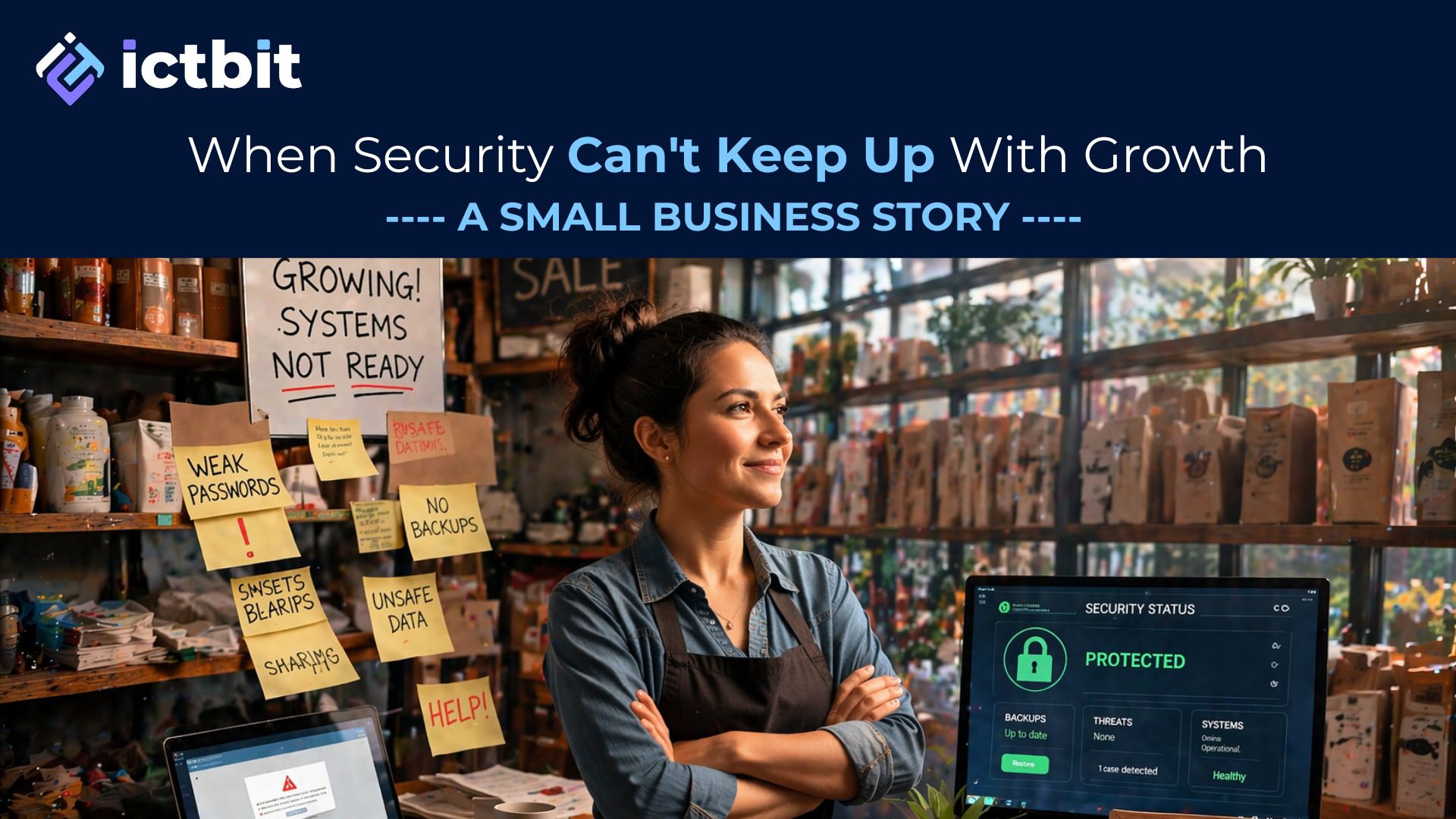
Sometimes a business grows fast – but the infrastructure doesn’t.
We worked with a client that began as a small neighborhood dance studio: close-knit, informal, everyone knew everyone, and no one asked too many questions about IT policy.
That kind of culture is a strength when you’re small. At scale, it becomes a liability.
The first red flag? Their bookkeeper was using a free Walla email account for company operations. If you know, you know.
What We Found Beneath the Surface
When we conducted our initial assessment, the picture wasn’t surprising – but it was critical:
- Workstations with no passwords – never configured, never questioned
- Unrestricted access between users – everyone could access everything
- Zero identity management – no visibility into who accessed what, or when
For employees? Highly convenient.
From a security perspective? The Wild West.
This Wasn’t Theoretical Risk
They had already experienced cyberattacks. They came through relatively unscathed – but largely by chance. And chance is not a security strategy.
The real turning point came when a larger company moved to acquire them. Suddenly, “this is how we’ve always done it” was no longer acceptable. They needed to meet real security standards – and quickly.
The Challenge: Real Security Without Breaking the Business
This is typically where IT providers introduce complex, expensive solutions that create more friction than value. We took a different approach.
We defined three non-negotiables from the outset:
- Real security – not superficial fixes over structural gaps
- Minimal disruption – the business still needs to operate
- A viable budget – something they can actually implement, not just approve
What We Implemented
We migrated them into a managed domain within Microsoft 365, fully hardened with Conditional Access policies, multi-factor authentication, and EDR protection across all endpoints.
Critical applications were moved to dedicated servers with built-in redundancy, and we established a consistent patch management cadence.
No rip-and-replace. Just precise, well-scoped execution.
The Resistance – Expected and Managed
Change always introduces friction. We heard the familiar concerns:
“This is more complicated.” – Yes. That’s also what makes it more secure.
“It’s less convenient.” – Until it becomes second nature.
“Why fix what isn’t broken?” – Because it was broken. They just hadn’t paid the price yet.
We rolled everything out gradually, with clear communication, patience, and a genuine effort to bring people along in the process – not impose change on them. That distinction is often overlooked. It made all the difference.
Where They Stand Today
Today, their environment is significantly more secure, structured, and efficient. Access is controlled, the attack surface has been reduced, and leadership finally has peace of mind.
The Bigger Takeaway
Enterprise-grade security is no longer reserved for enterprises.
Fast-growing organizations – regardless of size – can and should operate at a high security standard. In 2025, there’s no justification not to. Done right, it doesn’t have to disrupt operations or strain budgets.
If this feels familiar – it’s worth a conversation.