The Psychology Behind Cyberattacks: Why We’re Still the Soft Target
When people picture a cyberattack, they tend to imagine zero-day exploits, lines of malicious code, or some hoodie-clad mastermind hammering away at a terminal.
In reality?
Most successful attacks don’t start with technology. They start with people.
The attacker isn’t trying to breach your system.
They’re trying to breach your judgment.
The Real Attack Surface: Human Behavior
Social engineering isn’t guesswork. It’s behavioral science weaponized.
Attackers deliberately trigger:
- Fear and anxiety
- Curiosity
- Urgency
- The instinct to help
- Deference to authority
- Habitual, automatic behavior
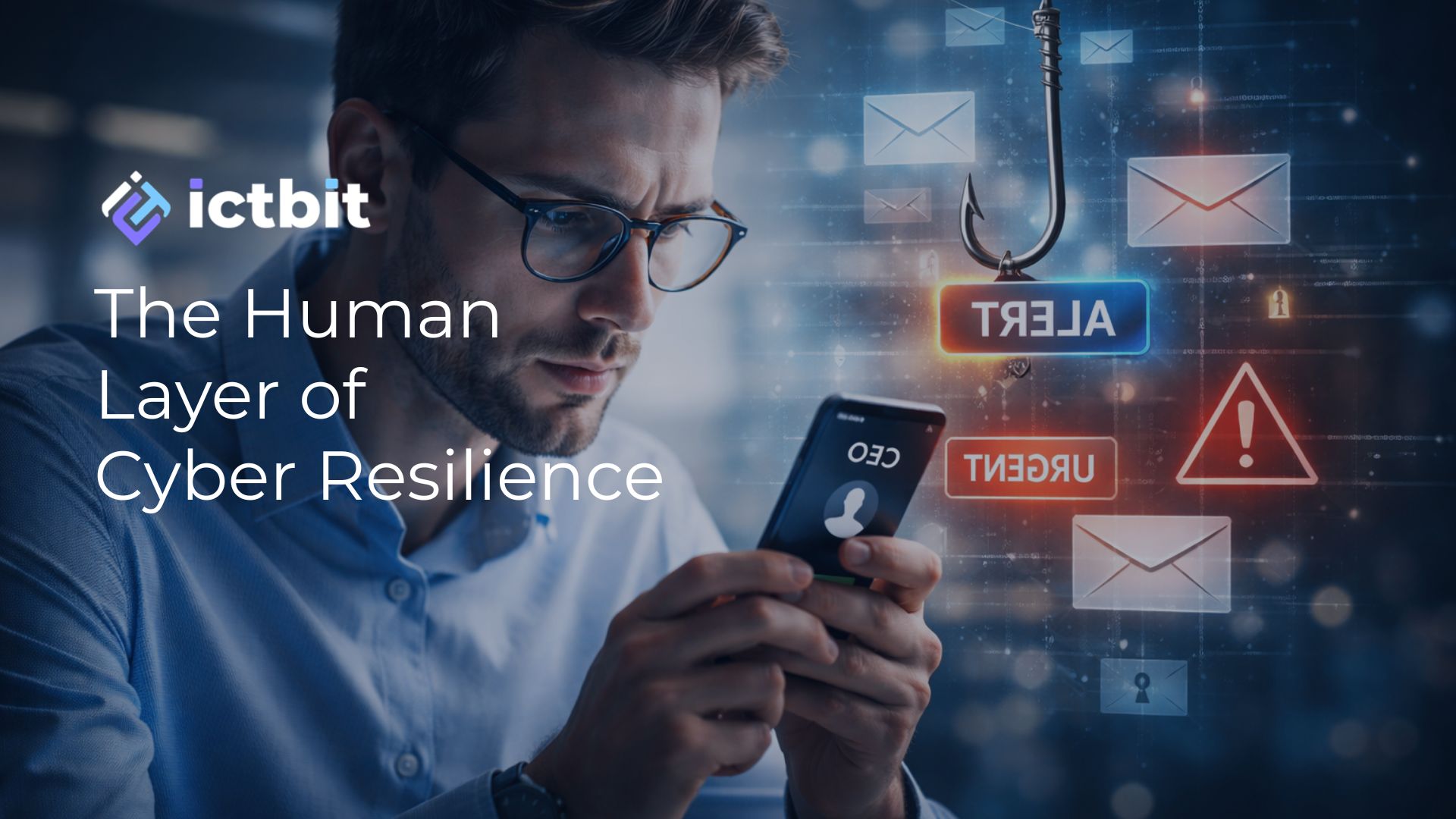
A “your account will be suspended” email.
A message that appears to come from the CEO.
An urgent invoice.
A file labeled “confidential.”
The moment emotion is activated, cognitive defenses drop. Critical thinking gives way to reaction.
That’s not a technical flaw.
That’s human nature.
Urgency: The Autopilot Effect
One of the most effective levers in any attack is time pressure.
When we feel we don’t have time to think, we default to autopilot:
Click. Approve. Open. Respond.
Attackers engineer urgency with precision. Sometimes it’s a threat. Sometimes it’s an opportunity. Sometimes it’s just a seemingly routine request. But the objective is always the same: bypass deliberation.
Familiarity as a Weapon
Trust is another powerful entry point.
We’re wired to trust what looks familiar:
- A known logo
- A corporate writing style
- A colleague’s name
- A vendor we already work with
The more personalized the message, the higher the success rate. And in an era of social media, public profiles, and open-source intelligence, harvesting personal and organizational data is frictionless.
The result? Attacks that feel legitimate – because they’re built from real information.
The Organizational Multiplier
Psychology doesn’t stop at the individual level. It scales across the organization.
- A culture of fear → employees hide mistakes → detection is delayed
- A culture of openness → early reporting → faster containment
- Fatigue and overload → significantly higher error rates
Security posture isn’t just about tools. It’s about behavior under pressure.
So How Do You Counter a Psychological Threat?
You can’t firewall human instinct.
Technology alone won’t fix this.
What actually moves the needle:
- Tailored training that reflects real-world attack patterns
- High-fidelity simulations that recreate real pressure
- Open reporting cultures where suspicion is encouraged, not punished
- Behavioral insight that identifies patterns before they escalate
Real information security starts with understanding people – not just systems.
From Weak Link to Strong Link
The question is no longer if an attack will happen. It’s how your organization responds in those first critical minutes.
From our experience investigating cyber incidents and running organizational drills, one thing is consistently clear: technology is almost never the sole issue. The human element is always part of the equation.
At ICTBIT, we don’t treat awareness as a checkbox exercise.
We design scenario-based drills grounded in real incidents we’ve seen in the field.
We help build reporting cultures where employees escalate concerns early – without fear.
We integrate security teams, leadership, and operational staff into one cohesive response framework.
Because in the moment of truth, security isn’t measured by the number of tools in your stack.
It’s measured by how your people behave when it matters most.
That’s where resilience becomes real.
And that’s where ICTBIT delivers.